How to Shoot Fireworks Photos on July Fourth


Firefighters and explosive experts will tell you that shooting fireworks can be a dangerous activity that only should be done under the supervision of professionals.
Emergency room workers will tell you that those experts are correct.
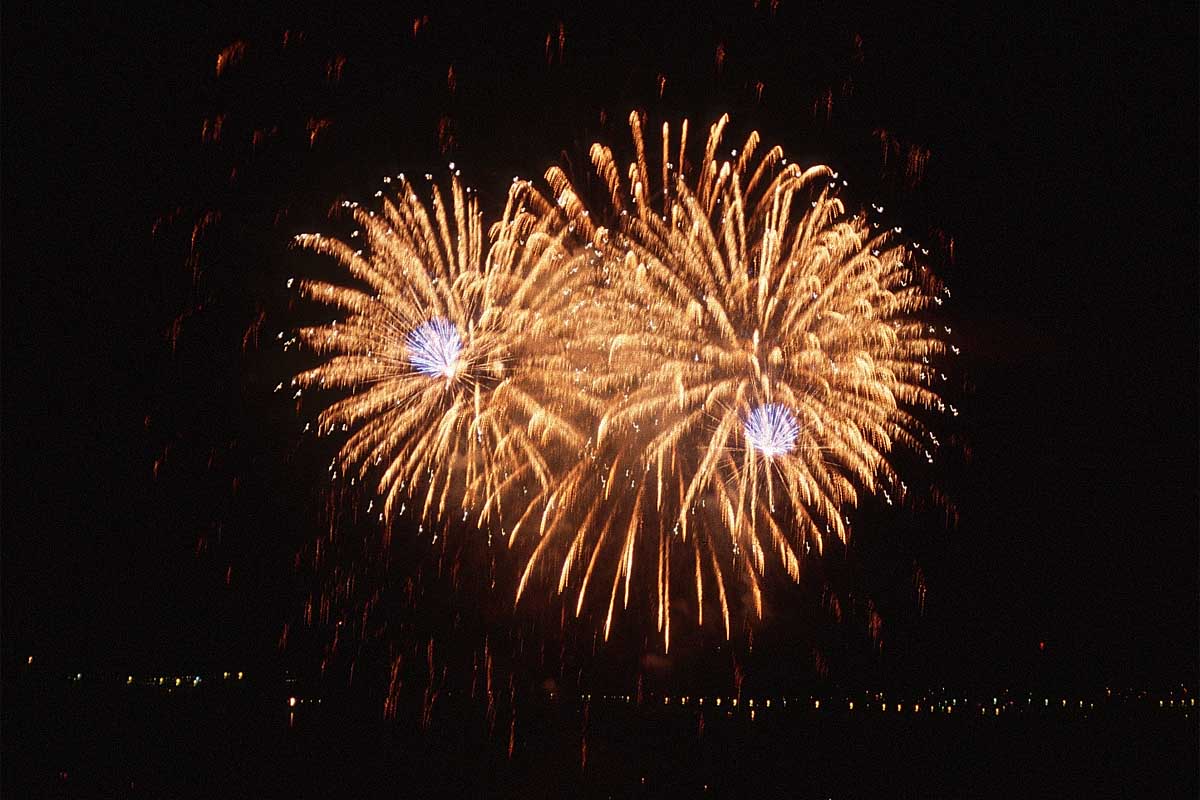
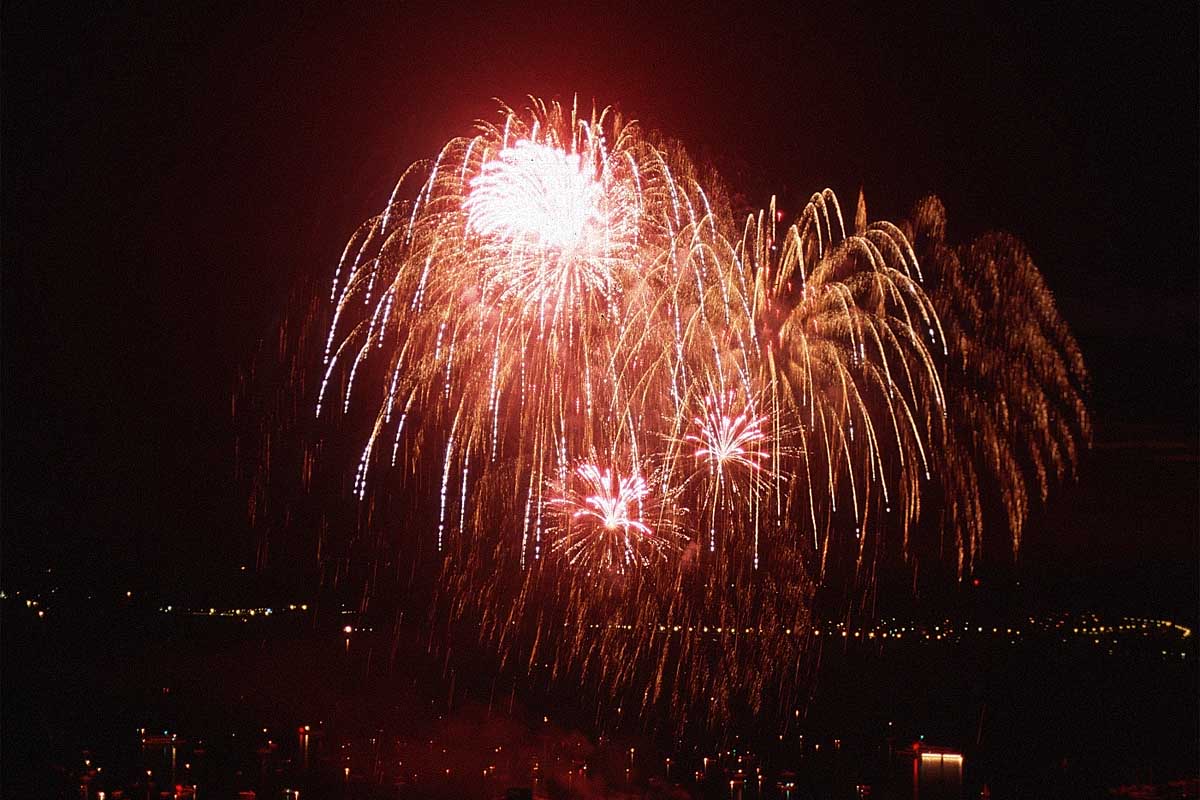
There is another way to shoot fireworks and be safe at the same time: Use your digital camera to shoot fireworks photos. Fireworks photography can be an enjoyable hobby for beginning and intermediate photographers that lends itself to amazing images of Fourth of July celebrations or other occasions with fireworks.
Here are a dozen fireworks photography tips that can help you shoot some amazing photos during Independence Day celebrations.
Equipment. Make sure you have everything you need, including extra memory cards, extra batteries, and tripods. Chances are good you'll have to park a vehicle far from where you shoot your fireworks photos, so plan ahead to make sure you have the needed equipment. Also, bring a small flashlight or penlight to help you make changes to the settings on your camera in the dark.
Location. Determining the best location to shoot fireworks photos is an often overlooked aspect of fireworks photography. Obviously, you need to find a location that is free of trees, tall buildings, and overhanging wires that could ruin your photo. However, you also should make sure the wind is at your back as you face the fireworks show. Then, the wind will carry any smoke away from you, giving your camera a clear shot of the fireworks. Try to pick a spot well away from other people, thereby avoiding having a stray head or somebody walking in your shot.
Location, again. Many large fireworks shows take place near historical buildings or other well-known landmarks. If you can frame your fireworks photos with these landmarks in the background of the shot, you may end up with a more interesting photo.
Fill flash. If you want to include some family members in the foreground of your fireworks photos, try firing a fill flash that will illuminate the people near the camera while capturing the fireworks in the background. It can be tricky to time the shutter speed with this technique, so you may want to try several shots at different shutter speeds to find a good shot. Otherwise, make sure the flash is turned off.
Go manual. Most fully automatic, point and shoot cameras rarely capture good shots of fireworks. Such cameras simply cannot set the exposure and shutter speed correctly because of the random nature of when the fireworks appear in the sky and because the light from the fireworks is very bright and doesn't last long. Some point and shoot cameras have a fireworks option in the scene modes, which may create a few good photos. However, the most reliable option is to manually control the shutter speed and exposure. With a manual focus camera, be sure to set the focus to infinity.
High quality. Make sure you set your camera to the highest-quality settings possible. Use plenty of resolution with fireworks photos.
Use low ISO settings. Because of the intensity of the light in a fireworks burst, it's best to use a low ISO setting that will limit the light striking the image sensor. Something between ISO 50 and ISO 200 usually is best, but you'll have to adjust the ISO setting manually.
Be steady. Always use a tripod to shoot fireworks photos. Because of the slow shutter speeds required to capture fireworks, such shots are especially susceptible to camera shake, which leads to blurry photos. Even the image stabilization features built into many new cameras cannot overcome the problem from camera shake with a slow shutter speed. Only a tripod can hold the camera steady enough.
Timing. When trying to time a fireworks burst for the best exposure, you might need some trial and error. However, it usually works best to open the shutter when you hear the shell launch into the air. Try to keep the shutter open for the entire burst. However, this can be tricky if several bursts are occurring simultaneously, which can interfere with the original burst that you're trying to capture. Try a few different techniques to determine what works best during a particular fireworks show.
Fully open shutter. One trick you can use is to open the shutter fully (by setting the shutter speed to "bulb") and place a piece of black cardboard over the lens to block all external light. Then remove the cardboard when you want to expose the photo and return the cardboard when you want to stop the exposure. If you do this several times, you can capture multiple fireworks bursts in one frame. Once you have the number of bursts you want, close the shutter. Just be careful not to bump the camera when moving the piece of cardboard.
Use a remote. If you have a remote or a cable release you can use to fire the shutter, it will greatly minimize the chances that you will bump the camera and ruin a shot by bumping the camera on the tripod.
Hope for some luck. With fireworks photography, luck plays a role. With a large fireworks show, you never quite know what a particular burst will look like ahead of time, and it could appear anywhere in the sky. Try a variety of shutter speeds and exposure settings, to give yourself the best chance of capturing some high quality photos.

Fireworks Photography Tips


The spectacle of fireworks attracts millions of spectators annually. Just recently my 3 year old daughter was asking to go see fireworks. Her prior viewing was over 11 months ago and apparently made a big impression on her then-2-year-old mind! Those of us with love for photography running deep desire to capture everything of beauty we come upon. Fireworks definitely fit that description. The good news is that fireworks photography is easy. Following are some tips to make your fireworks photography successful. Start with a solid tripod. If your camera is not motionless during the rather long exposures necessary for fireworks photography, the smooth paths of light the fireworks create will appear jagged. Mount your camera on a tripod and carefully level it. I generally like a portrait/vertical orientation (vs. landscape/horizontal orientation), but that is personal preference and is greatly influenced by additional subjects framed in the picture. Fireworks launched simultaneously from multiple locations also work well with a landscape orientation. Also important is a remote release for the camera. Again, you want the camera to be motionless during the exposure. Most camera lenses will work well as long as they are the right focal length or focal length range. Most camera lenses provide very good optical quality at f/8 through f/16, the apertures most used for fireworks photography. If you are not sure what focal length you need, take a couple of lenses. Zoom lenses provide the most flexibility if you are not sure of your viewing distance or focal length requirements. A scouting trip prior to the event will (as always) prove valuable. All fireworks events take place after dark. Working in the dark is challenging even when you are intimately familiar with your equipment. A small issue such as dropping a memory card can turn into a frustrating problem. Pack a small flashlight. Show up early for the fireworks event. Make sure your location has a clear line of site and that late arriving viewers cannot obstruct your view. You might setup your equipment behind your blanket to help keep the view clear. At the same time, treat others with consideration. Be sure the background is pleasant. Remember that street and other lights will become overexposed blobs that require post-processing to remove. Setting up in the daylight is easier than in the dark. Leveling the camera, setting manual focus and getting the proper framing is difficult against a dark sky. Framing may need to be tweaked after the action starts - but take a guess. Get all of these tasks out of the way before complete darkness. I generally use manual everything for fireworks photography: manual exposure, manual focus ... As I mentioned previously, I like to setup my manual focus setting prior to dark. Pick a subject that is a similar distance as the fireworks will be. Since I often start my exposures with a dark sky over all focus points, autofocus does not work. Since a narrow aperture is used at a generally long distance, a wide depth of field usually covers any manual focus errors. Be careful to not bump the focus ring after the action starts. Also remember that changing focal length changes focusing in some zoom lenses. Check your lens for this attribute before dark. As a focus alternative, you can focus on the first burst that is fired. For a shutter speed, Bulb is often best. I like to press the remote shutter release as a rocket is launching and hold it open until the firework completely fades from its explosion. This is generally 2 to 10 seconds. Missed the rockets on the first blast? You might be able to include the next set of rockets in the same exposure. Because the fireworks are constantly and rapidly moving, keeping the shutter open for long periods of time does not affect the exposure. Exposure is based on the aperture and ISO settings used. If there are subjects in addition to the fireworks included in the photo that are lit by a constant light, a specific shutter speed may be required. You may think that a fast aperture would be helpful since you are shooting in the dark, but you are actually shooting bright light. The best aperture is usually between a narrow f/8 and an even narrower f/16. The exact setting is somewhat dependent on the distance of the fireworks (light fall-off, air clarity). Using an aperture narrower than f/16 will result in soft (not sharp) images as diffraction becomes an issue. Watch your histogram - keep the brightest pixels close to the right of the graph but not overexposed (stacked on the right side of the histogram). I generally use ISO 100 for the lowest noise levels possible. Quickly analyze the first photograph you can capture. How does the histogram read? Is the framing correct? Remember that you can crop later - but building missing sections of bursts is very complicated and time consuming. Is the image sharp? Make any adjustments necessary until you have it perfected. Then concentrate on the action. Long shows will require lots of memory capacity - be prepared - Have spare cards pre-formatted. Make spot checks periodically to make sure no settings have changed. Avoid too many bursts in one fireworks photo. In my opinion, the overexposed areas created by repeated rockets and bursts make a fireworks photo look unattractive in addition to looking too busy. The finale may be the worst time to photograph fireworks. Your opinion may be different - and photography has no rules. Be creative. For added impact, get additional subjects in your fireworks photos. Large buildings look great in fireworks pictures. Lakes and rivers create beautiful reflections. Adding a person or persons to the photo adds interest. A flash will be of no use in lighting the fireworks, but can be useful in lighting a foreground subject watching the fireworks. Try lighting foreground subjects with your flashlight. You will probably want to focus on foreground subjects instead of the fireworks for these shots. Again, be creative! Creativity doesn't need to end with the shot. The black sky background in fireworks photos makes it easy to add other fireworks blasts or other items (such as a moon) to your images in Photoshop. Try replacing the complete black background with your country's flag. Fireworks photography is not hard. Getting a great looking fireworks photograph just requires a little planning and simple execution. You will be adding impressive shots to your collection in no time.

How to Photograph Fireworks Displays


Do you want to know how to photograph fireworks? With 4th July just days away I thought I’d refresh this article in which I give 10 Fireworks Photography tips to help you get started.
Fireworks Displays are something that evoke a lot of emotion in people as they are not only beautiful and spectacular to watch but they also are often used to celebrate momentous occasions.
I’ve had many emails from readers asking how to photograph fireworks displays, quite a few of whom have expressed concern that they might just be too hard to really photograph. My response is always the same – ‘give it a go – you might be surprised at what you end up with’.
My reason for this advice is that back when I bought my first ever SLR (a film one) one of the first things I photographed was fireworks and I was amazed by how easy it was and how spectacular the results were. I think it’s even easier with a digital camera as you can get immediate feedback as to whether the shots you’ve taken are good or not and then make adjustments.
Of course it’s not just a matter of going out finding a fireworks display – there are, as usual, things you can do to improve your results. With 4 July just around the corner I thought I’d share a few fireworks digital photography tips:Read more: http://www.digital-photography-school.com/how-to-photograph-fireworks#ixzz0yiCfPIY4
1. Use a Tripod

Perhaps the most important tip is to secure your digital camera to something that will ensure it doesn’t move during the taking of your shots. This is especially important in photographing fireworks simply because you’ll be using longer shutter speeds which will not only capture the movement of the fireworks but any movement of the camera itself. The best way to keep your camera still is with a tripod (read our series on tripods and how to use and buy them). Alternatively – keep in mind that there are other non Tripod options for beating camera shake.
2. Remote Release
One way to ensure your camera is completely still during fireworks shots is to invest in a remote release device. These will vary from camera to camera but most have some sort of accessory made for them. The other way of taking shots without touching your camera is to use the self timer. This can work but you really need to be able to anticipate shots well and its very very hit and miss (read more on remote shutter releases).
3. Framing Your Shot
One of the most difficult parts of photographing fireworks is working out where to aim your camera. The challenge you’ll face in doing this is that you generally need to aim your camera before the fireworks that you’ll be photographing goes off – anticipation is key. Here are a few points on getting your framing right.
Photo by Stuck in Customs
Scope out the location early – Planning is important with fireworks and getting to the location early in order to get a good, unobstructed position is important. Think about what is in the foreground and background of your shots and make sure you won’t have people’s heads bobbing up into your shots (also consider what impact you’ll have on others around you also). Take note of where fireworks are being set up and what parts of the sky they are likely to be shot into – you might also want to try to ask some of those setting up the display for a little information on what they are planning. Also consider what focal lengths you might want to use and choose appropriate lenses at this time (rather than in the middle of the show).
Watch your Horizons - One thing that you should always consider when lining up fireworks shots is whether your camera is even or straight in it’s framing. This is especially important if you’re going to shooting with a wide focal length and will get other background elements in your shots (ie a cityscape). Keeping horizons straight is something we covered previously on this site and is important in fireworks shots also. As you get your camera on your tripod make sure it’s level right from the time you set up.
Vertical or Horizontal? – There are two main ways of framing shots in all types of photography, vertically (portrait) or horizontally (landscape). Both can work in fireworks photography but I personally find a vertical perspective is better – particularly as there is a lot of vertical motion in fireworks. Horizontal shots can work if you’re going for more of a landscape shot with a wider focal length of if you’re wanting to capture multiple bursts of fireworks in the one shot – but I don’t tend to go there that often.
Remember your framing – I find that when I photograph fireworks that I spend less time looking in my viewfinder and more looking at the sky directly. As a result it’s important to remember what framing you have and to watch that segment of the sky. Doing this will also help you to anticipate the right time for a shot as you’ll see the light trails of unexploded rockets shooting into the sky.
4. Focal Length?

One of the hardest parts of photographing fireworks is having your camera trained on the right part of the sky at the right time. This is especially difficult if you’re shooting with a longer focal length and are trying to take more tightly cropped shots. I generally shoot at a wider focal length than a tight one but during a show will try a few tighter shots (I usually use a zoom lens to give me this option) to see if I can get lucky with them. Of course zoomed in shots like the one to the left can be quite effective also. They enable you to really fill the frame with great color. Keep in mind however that cropping of your wider angle fireworks shots can always be done later to get a similar impact in your photography.
5. Aperture

A common question around photographing fireworks displays is what aperture to use. Many people think you need a fast lens to get them but in reality it’s quite the opposite as the light that the fireworks emit is quite bright. I find that apertures in the mid to small range tend to work reasonably well and would usually shoot somewhere between f/8 to f/16.
6. Shutter Speed

Probably more important to get right than aperture is shutter speed. Fireworks move and as a result the best photographs of them capture this movement meaning you need a nice long exposure. The technique that I developed when I first photographed fireworks was to shoot in ‘bulb’ mode. This is a mode that allows you to keep the shutter open for as long as you hold down the shutter (preferably using a remote shutter release of some type). Using this technique you hit the shutter as the firework is about to explode and hold it down until it’s finished exploding (generally a few seconds).
You can also experiment with set shutter speeds to see what impact it will have but I find that unless you’re holding the shutter open for very long exposures that the bulb technique works pretty well.
Don’t keep your shutter open too long. The temptation is to think that because it’s dark that you can leave it open as long as you like. The problem with this is that fireworks are bright and it doesn’t take too much to over expose them, especially if your shutter is open for multiple bursts in the one area of the sky. By all means experiment with multiple burst shots – but most people end up finding that the simpler one burst shots can be best.
7. ISO
Shooting at a low ISO is preferable to ensure the cleanest shots possible. Stick to ISO 100 and you should be fine.
8. Switch off your Flash

Shooting with a flash will have no impact upon your shots except to trick your camera into thinking it needs a short exposure time. Keep in mind that your camera’s flash will only have a reach of a few meters and in the case of fireworks even if they were this close a flash wouldn’t really have anything to light except for some smoke which would distract from the real action (the flashing lights).
9. Shoot in Manual Mode
I find I get the best results when shooting in manual exposure and manual focus modes. Auto focusing in low light can be very difficult for many cameras and you’ll end up missing a lot of shots. Once your focusing is set you’ll find you don’t really need to change it during the fireworks display – especially if you’re using a small aperture which increases depth of field. Keep in mind that changing focal lengths will mean you need to need to adjust your focusing on most lenses.
10. Experiment and Track Results

Throughout the fireworks display periodically check your results. I generally will take a few shots at the start and do a quick check to see that they are OK before shooting any more. Don’t check after every shot once you’ve got things set up OK (or you’ll miss the action) but do monitor yours shots occasionally to ensure you’re not taking a completely bad batch.
Also experiment with taking shots that include a wider perspective, silhouettes and people around you watching the display. Having your camera pointed at the sky can get you some wonderful shots but sometimes if you look for different perspectives you can get a few shots that are a little less cliche and just as spectacular. Most of the best shots that I’ve seen in the researching of this article have included some other element than the fireworks themselves – whether it be people, buildings, landmarks or wider cityscape perspectives.

Fireworks


Fireworks

It is generally recognized that fireworks originated in China during the Sung dynasty (960-1279). A cook in ancient China discovered that a mixture of sulphur, saltpetre, and charcoal was highly flammable and would explode if confined in a small space. This discovery was first used for entertainment. The technique was soon adapted to weaponry and used to shoot rocket-powered arrows. In the 7th century the knowledge spread west via Arabia, reaching Europe in the 13th century where pyrotechnics developed with the invention of the gun in the 14th century. It was not until the 19th century that fireworks became as vividly colourful as we know them today. Brilliant colours are achieved by combining potassium chlorate and various metallic salts. These salts produce a variety of colours: strontium burns red; copper makes blue; barium glows green; and sodium produces yellow. Magnesium, aluminium and titanium give off white sparkles or a flash. Every firework show is a fantastic display of physics. The pyrotechnist has to take into account the relationships between vectors, velocities, projectiles and their trajectories together with the explosion forces behind burst patterns.